How-To Guides
Garage Door Safety Sensors: How to Test and Fix Alignment in Your OC Home

OUR SERVICE AREA
Urgent Garage Doors is Irvine-based and available Open 24/7 for residential and commercial garage door services across Orange County. We handle Emergency Garage Door Repair, Spring & Cable Repair, Garage Door Installation, Opener & Smart Access and Maintenance & Upgrades - fast, professional, and backed by strong warranties.
Our expert garage door services technicians serve Aliso Viejo, Anaheim, Brea, Buena Park, Costa Mesa, Cypress, Dana Point, Fountain Valley, Fullerton, Garden Grove, Huntington Beach, Irvine, La Habra, La Palma, Laguna Beach, Laguna Hills, Laguna Niguel, Laguna Woods, Lake Forest, Los Alamitos, Mission Viejo, Newport Beach, Orange, Placentia, Rancho Santa Margarita, San Clemente, San Juan Capistrano, Santa Ana, Seal Beach, Stanton, Tustin, Villa Park, Westminster, Yorba Linda, and the surrounding neighborhoods.
Book Your Free Consultation Call Now
Contact us:
Hours: Open 24/7
76 Ashford, Irvine, California 92618
Picture this scenario: You're rushing to leave your Turtle Rock home for work when your garage door suddenly reverses halfway down, refusing to close. The LED lights on your opener are blinking frantically, and you're left wondering what went wrong. This frustrating situation happens to thousands of Orange County homeowners every year, and nine times out of ten, the culprit is misaligned safety sensors.
Your garage door's safety sensors are the invisible guardians that prevent accidents and injuries, but they require regular testing and occasional adjustment to function properly. In OC's unique climate - with coastal moisture, intense sun, and ongoing construction in many neighborhoods - these sensors face challenges that can throw them out of alignment without warning.
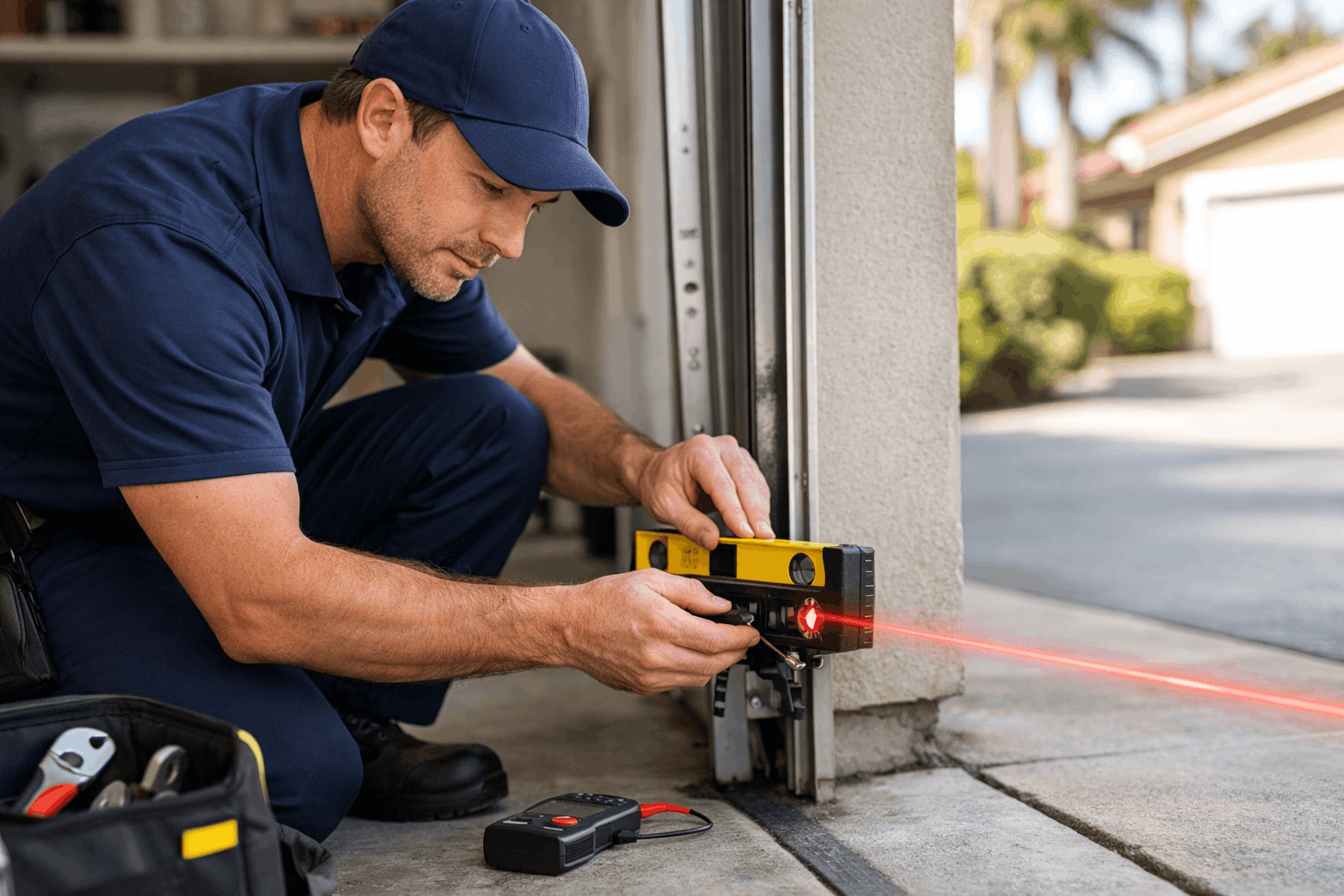
Garage door safety sensors are photoelectric devices mounted on either side of your garage door opening, typically 4-6 inches above the floor. These sensors create an invisible infrared beam across the door's path that automatically reverses or stops the door if anything breaks the beam while closing.
The primary purpose of these safety sensors is preventing injuries and property damage. Before sensors became mandatory, garage doors caused numerous accidents when they closed on people, pets, or objects. Modern photoelectric sensors have dramatically reduced these incidents by providing a reliable safety mechanism that works every time the door operates.
Every garage door opener manufactured after 1993 must include safety sensors to meet federal safety standards. These sensors work in conjunction with other safety features like the automatic reversal mechanism built into the opener motor, creating multiple layers of protection for your family.
The infrared beam sensor system consists of two components: a sending unit that emits an infrared beam and a receiving unit that detects it. When both sensors are properly aligned, the invisible beam creates a continuous connection between them. If anything interrupts this beam while the door is closing, the sensor mechanism immediately signals the opener to reverse direction.
The sensors communicate with your garage door opener through low-voltage wiring that carries both power and signal information. Most systems use 24-volt DC power, which is safe to work with but still requires proper handling during testing and adjustment.
The Underwriters Laboratories standard UL 325 mandates that all residential garage door openers include automatic reversal systems and photoelectric sensors. These federal requirements went into effect in 1993 following extensive safety research and accident data analysis.
UL 325 safety standards specify that sensors must be mounted no higher than 6 inches above the garage floor and must be capable of detecting objects as small as 1 inch in diameter. The standards also require that doors reverse within 2 seconds of beam interruption and that the reversal force not exceed 15 pounds.
| Requirement | Specification |
|---|---|
| Maximum mounting height | 6 inches above floor |
| Minimum detection size | 1 inch diameter object |
| Maximum reversal time | 2 seconds |
| Maximum reversal force | 15 pounds |
Orange County homeowners typically notice sensor problems through several telltale symptoms that indicate alignment issues or component failure. Recognizing these early warning signs can prevent bigger problems and maintain your garage door's safety features.
Environmental factors in OC - from Santa Ana winds to coastal humidity - can gradually shift sensor alignment or interfere with their operation. Many sensor problems develop slowly over time, making them easy to miss until they cause obvious garage door malfunctions.
The following table shows common sensor problems and their typical causes in Orange County homes:
| Symptom | Likely Cause | Common in OC Due To |
|---|---|---|
| Door reverses immediately | Misaligned sensors | Foundation settling, earthquakes |
| Intermittent closing problems | Dirty sensor lenses | Dust storms, construction debris |
| Works sometimes, not others | Sun interference | Bright southern California sun |
| Blinking LED lights | Wiring issues | Coastal corrosion, moisture |
When garage door sensors detect an obstruction - real or perceived - they trigger the door reversal mechanism to prevent accidents. Misaligned sensors create a false obstruction signal, causing the door to reverse direction as soon as it starts closing or stopping partway through its travel.
This closing problem often develops gradually in OC homes due to foundation settling, minor earthquake movement, or vibration from nearby construction. Even a slight shift in sensor position can break the infrared beam alignment and prevent normal door operation.
Most garage door sensors feature LED indicators that show their operational status through different blinking patterns. A solid light typically indicates proper alignment and function, while various blinking patterns signal specific problems with alignment, power, or beam detection.
Different opener brands use different LED codes - LiftMaster sensors blink when misaligned, Genie sensors show steady lights when properly aligned, and Craftsman units may display different patterns for various error conditions. Understanding your specific system's LED indicators helps diagnose problems quickly.
Common LED diagnostic patterns include rapid blinking for misalignment, slow blinking for power issues, and alternating patterns for wiring problems. Consult your opener manual or look for diagnostic information printed on the sensor housing.
Sensors that work sometimes but fail at other times typically suffer from environmental interference or borderline alignment problems. In Orange County, these intermittent problems often correlate with weather conditions, time of day, or seasonal changes.
Temperature fluctuations can cause slight expansion and contraction in sensor mounting brackets, affecting alignment just enough to cause occasional problems. Similarly, direct sunlight can interfere with infrared sensors, particularly during certain times of day when the sun angle aligns with the sensor beam path.
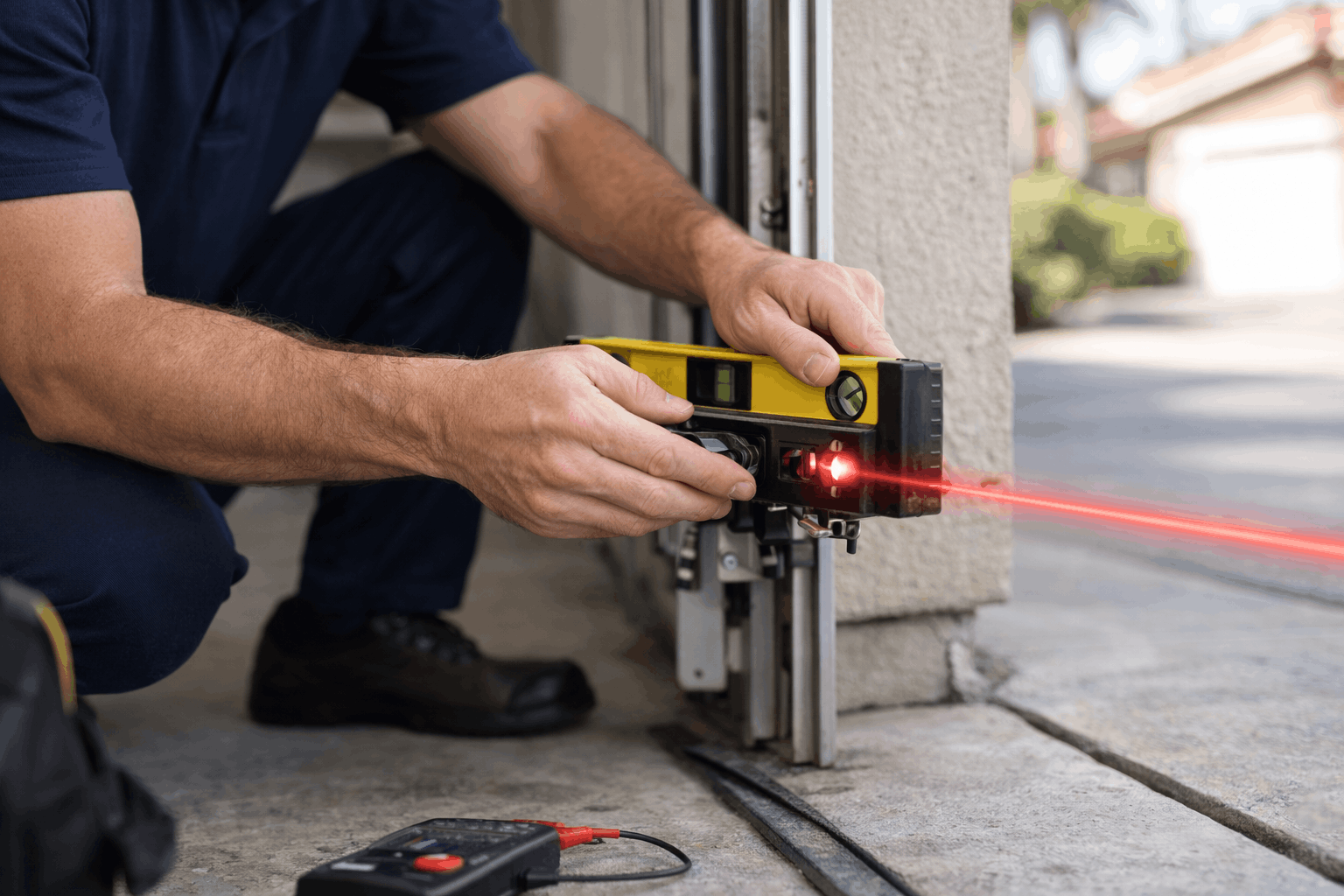
Urgent Garage Doors serves Irvine and all of Orange County.
Testing your garage door sensors regularly helps identify problems before they cause complete system failure. The testing process involves both visual inspection and functional tests that verify proper sensor operation and beam alignment.
Perform sensor testing at least monthly, and always after any garage work, earthquakes, or severe weather that might affect sensor alignment. Most homeowners can complete these troubleshooting steps safely using basic household items.
Always test sensors during different lighting conditions - both daylight and evening - since some problems only appear under specific lighting situations common in Orange County's bright, sunny climate.
Start your sensor condition assessment by examining both sensor units for obvious physical damage, debris, or mounting problems. Look for cracked housings, loose mounting screws, damaged wiring, or spider webs and dirt covering the sensor lenses.
Check that both sensors face each other directly and appear to be at the same height. Measure the distance from the garage floor to each sensor - they should be identical and no more than 6 inches high. Look for any obvious tilting or rotation that would prevent proper beam alignment.
Inspect the wiring connection at each sensor and trace the wires back to the opener unit, looking for cuts, pinch points, or corrosion damage that's common in coastal OC areas.
The cardboard box sensor response test provides a simple way to verify that your sensors detect obstructions properly. Place a cardboard box or similar object in the doorway between the sensors, then attempt to close the door using your remote or wall button.
The door should immediately reverse direction when it encounters the box, demonstrating that the sensors detected the obstruction and triggered the safety mechanism. If the door continues closing and hits the box, your sensors are not functioning properly and need immediate attention.
Repeat this test at different positions between the sensors to verify consistent beam coverage across the entire doorway opening.
LED diagnostics provide immediate feedback about sensor status and alignment. With the garage door fully open, observe the LED lights on both sensors - most systems show steady lights when properly aligned and communicating.
Block the beam with your hand while watching the LED status lights. The receiving sensor should immediately change its LED pattern when the beam is broken, then return to normal when you remove your hand. This confirms that the sensors are detecting beam interruption properly.
If the LEDs don't change when you block the beam, or if they show constant blinking patterns, the sensors need alignment or repair attention.
Proper sensor alignment requires both sensors to face each other perfectly, creating an unobstructed infrared beam across the garage door opening. Even small misalignments can prevent normal door operation and compromise safety protection.
The alignment adjustment procedure involves loosening mounting brackets, repositioning sensors, and fine-tuning their position until the LED indicators show proper beam connection. This process typically takes 10-15 minutes with basic tools.
Many Orange County homes require periodic sensor realignment due to foundation settling, seismic activity, or vibration from construction projects in rapidly developing neighborhoods like Woodbury and Cypress Village.
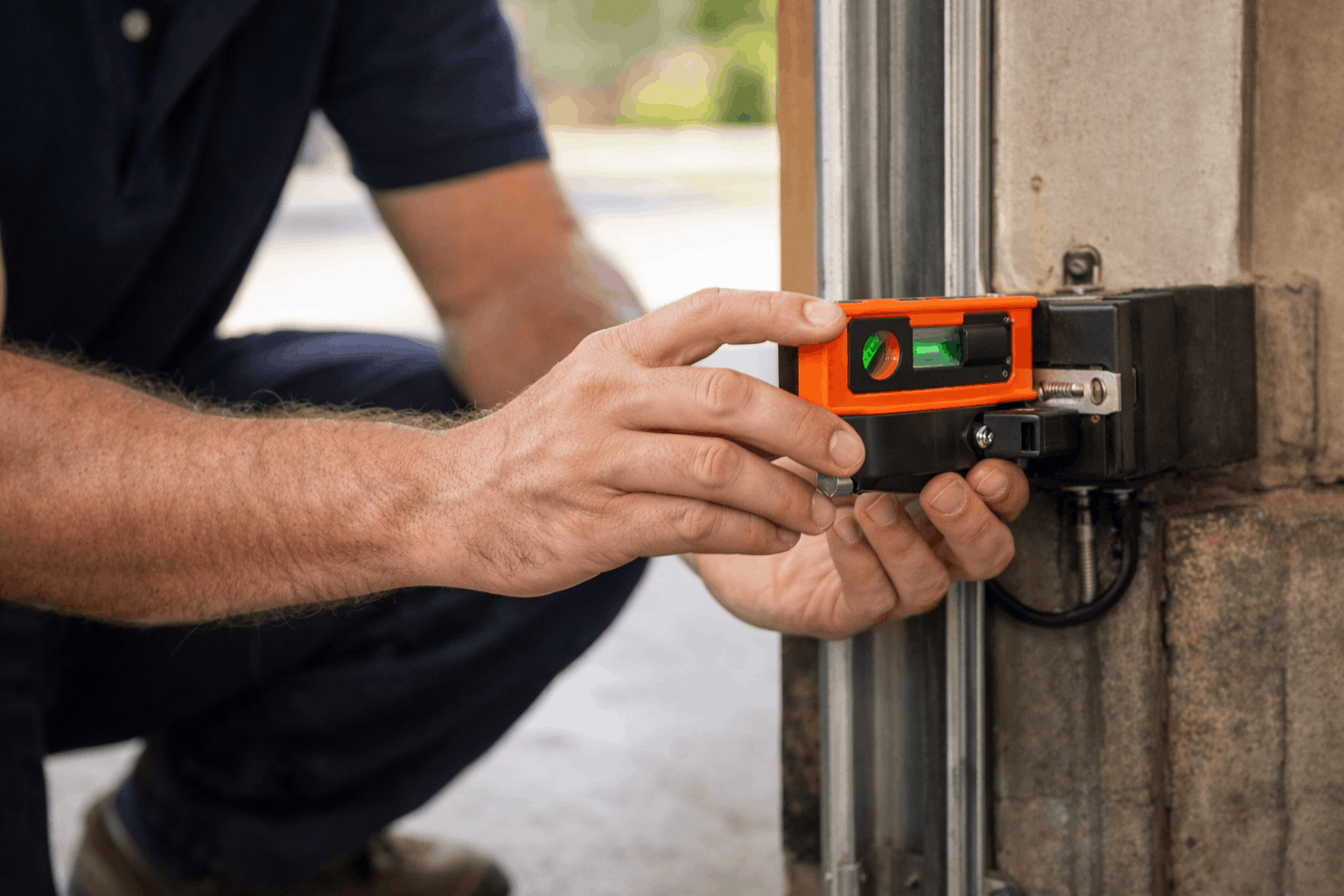
Basic alignment tools include a Phillips head screwdriver, small level, measuring tape, and clean cloth for lens cleaning. Some installations may require needle-nose pliers for wire management or a socket wrench for bracket adjustments.
Keep a flashlight or headlamp handy for illuminating the work area, especially if your garage has poor lighting. Required equipment also includes safety glasses if you're working with corroded or damaged brackets common in coastal Orange County locations.
Mount sensors between 4-6 inches above the garage floor, with both units at identical heights for proper beam alignment. Measure from the floor to the center of each sensor lens to verify matching mounting specifications.
The sensors should be positioned on opposite sides of the garage door opening, typically mounted to the vertical door tracks or adjacent wall framing. Maintain at least 6 inches clearance from the door path to prevent interference during door operation.
In wider garage openings common in newer OC developments, ensure the sensors can maintain a strong beam connection across distances up to 30 feet, which represents the maximum range for most residential sensor systems.
Make small adjustments to sensor position by loosening the mounting bracket screws and gently rotating or tilting each unit. Watch the LED indicators while adjusting - they'll show steady lights when proper beam alignment is achieved.
Start with the receiving sensor (usually the one with green LED) and adjust it until the light becomes steady. Then fine-tune the sending sensor until both units show proper status lights. Small movements make big differences in beam alignment, so adjust gradually.
Test the alignment by operating the door several complete cycles, watching for any LED changes that might indicate intermittent alignment problems during door vibration.
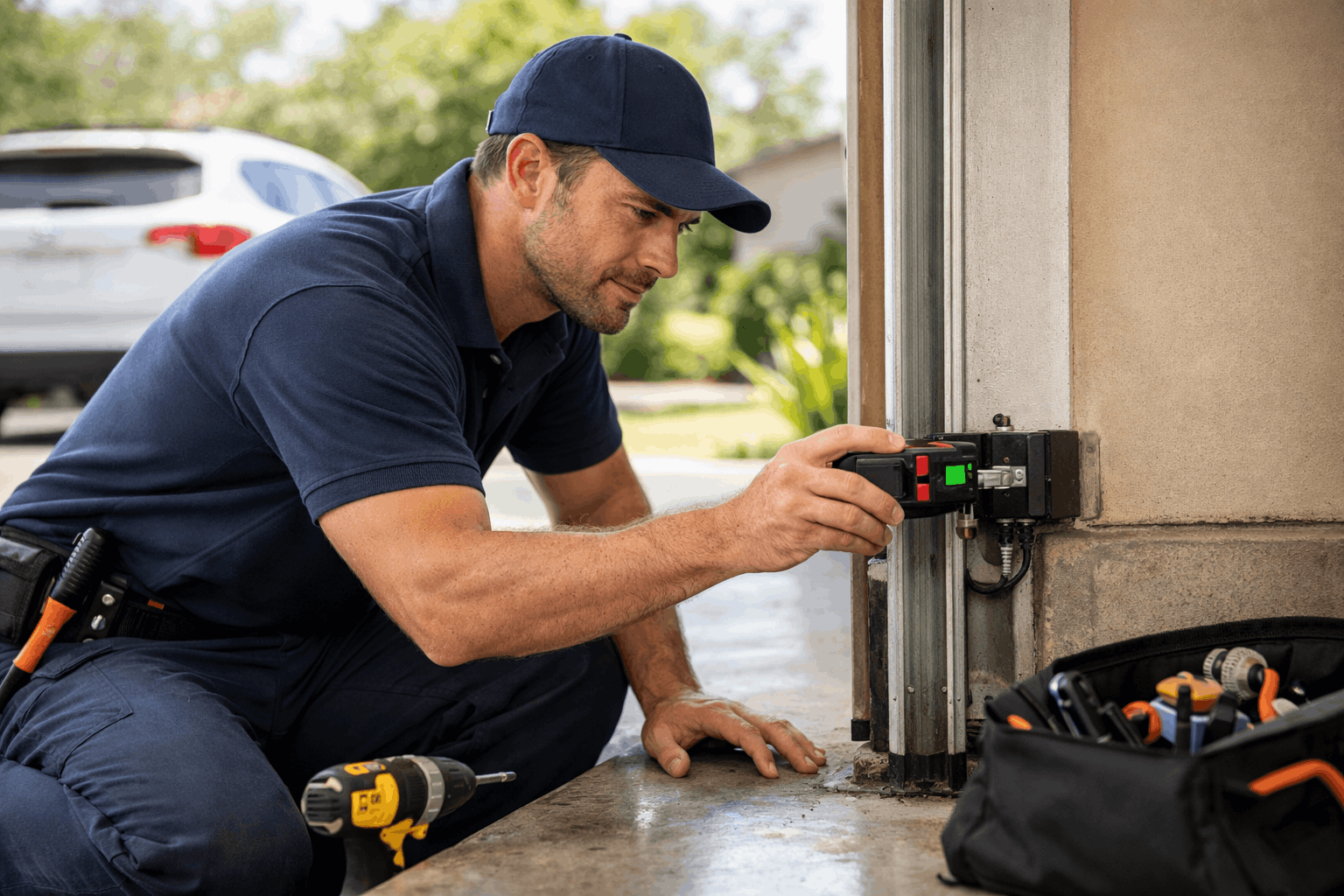
Orange County's unique environmental conditions create specific challenges for garage door safety sensors. Understanding these local factors helps homeowners prevent problems and maintain reliable sensor operation year-round.
Coastal proximity affects homes from Newport Beach to Huntington Beach with salt air corrosion, while inland areas like Irvine and Tustin deal with dust, construction vibration, and intense sun exposure. Each environmental factor requires different preventive measures.
Rapid development in communities like Great Park and Pavilion Park subjects nearby homes to construction-related vibration that gradually shifts sensor alignment over time.
Homes within 5 miles of the Pacific Ocean face accelerated corrosion of sensor wiring and mounting hardware due to salt air exposure. This coastal effects damage often appears as green corrosion on electrical connections or rust on steel mounting brackets.
Salt air corrosion can cause intermittent electrical connections that result in sporadic sensor operation. Regular cleaning and application of dielectric grease to electrical connections helps prevent moisture-related sensor failures in coastal OC locations.
Consider upgrading to stainless steel mounting hardware if your Laguna Beach or Dana Point home experiences repeated corrosion problems with standard sensor mounting systems.
Southern California's intense sunlight can interfere with infrared sensors, particularly when direct sun shines into the receiving sensor lens. This sun interference typically occurs during specific times of day when the sun angle aligns with the sensor beam path.
Heat effects from prolonged sun exposure can also cause thermal expansion in sensor housings and mounting brackets, leading to gradual alignment drift over time. Sensors mounted on south-facing garage walls experience the most severe heat-related problems.
Installing simple sun shields or repositioning sensors slightly can eliminate most sun-related interference problems without compromising safety performance.
Ongoing development in areas like Eastwood Village, Portola Springs, and Orchard Hills subjects nearby homes to regular construction vibration that can gradually shift sensor alignment. Even minor foundation movement affects the precise alignment required for proper sensor operation.
Heavy construction equipment operating on adjacent properties creates ground vibration that travels through soil and concrete, potentially affecting sensor mounting stability over time. Homes on the same street as active construction sites often experience alignment drift issues.
Monitor sensor alignment more frequently if your neighborhood has active construction projects, and consider upgrading to more robust mounting systems if alignment drift becomes a recurring problem.
Urgent Garage Doors serves Irvine and all of Orange County.
Regular sensor maintenance prevents most common problems and extends the life of your garage door safety system. Simple cleaning and inspection procedures performed monthly can identify issues before they cause door operation problems.
Orange County's dusty conditions during Santa Ana wind events require more frequent sensor cleaning than in other climates. Dust accumulation on sensor lenses can gradually reduce beam strength and cause intermittent operation problems.
Preventive care also includes protecting sensors from physical damage, maintaining proper wire routing, and addressing environmental factors that affect long-term reliability.
Clean sensor lenses using a soft, lint-free cloth slightly dampened with water or glass cleaner. Avoid harsh chemicals or abrasive materials that could scratch or damage the plastic lens covers. Gentle cleaning methods protect the sensitive optical components inside each sensor.
Remove spider webs, dust, and debris from sensor housings regularly, paying particular attention to ventilation openings that allow air circulation. Use compressed air or a soft brush to clean hard-to-reach areas without damaging delicate components.
After cleaning, test sensor operation to verify that lens cleaning improved beam detection and LED status indication.
Weather protection strategies include ensuring sensors have adequate drainage to prevent water accumulation and checking that mounting brackets remain secure during high winds. Most sensors include built-in weather sealing, but additional protection may be needed in exposed locations.
Consider installing small protective covers or shields if your garage faces prevailing winds that drive rain or debris directly into the sensor housings. Weatherproofing improvements are particularly important for homes in exposed hillside locations throughout Orange County.
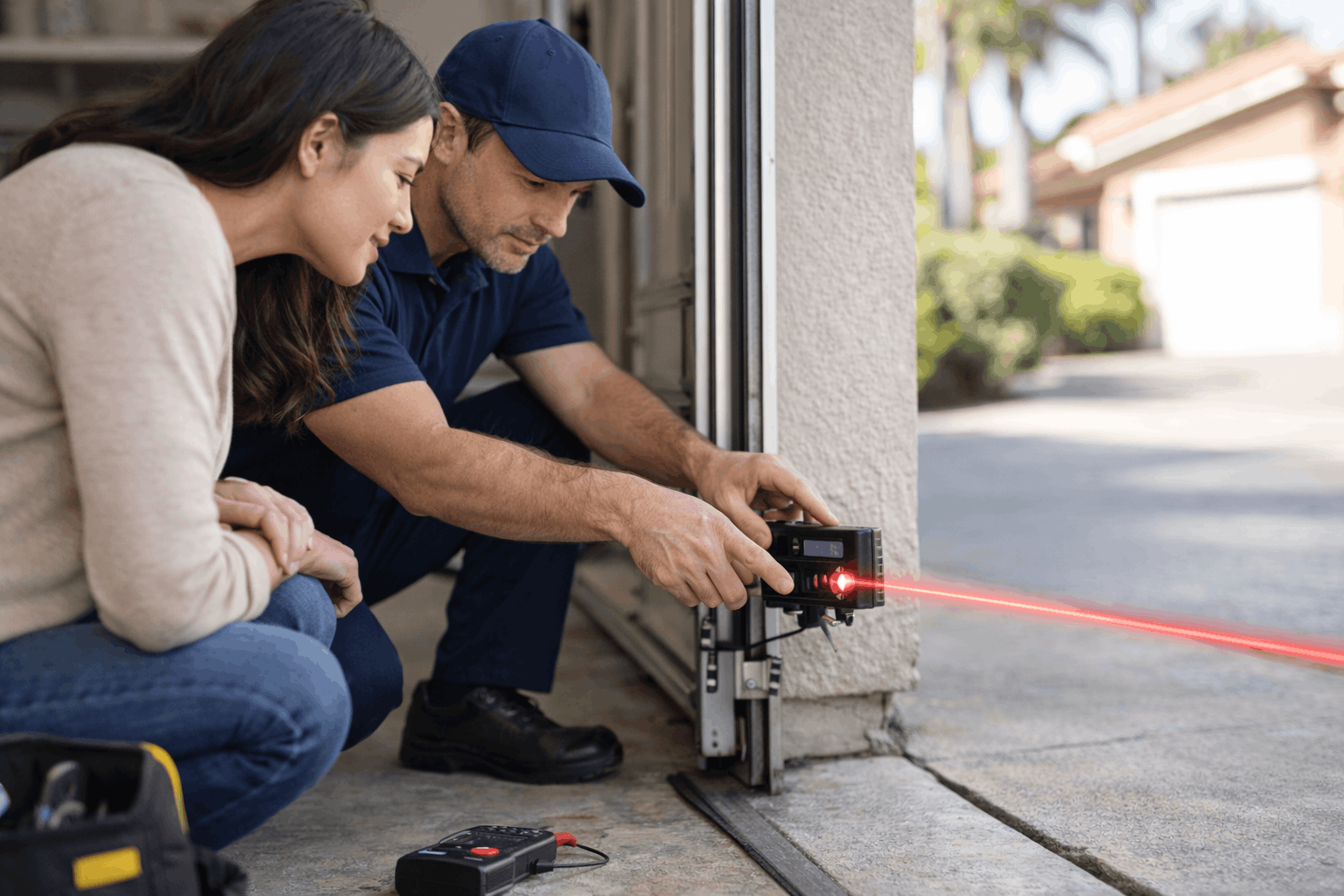
Deciding between sensor replacement and repair depends on the age, condition, and cost-effectiveness of fixing existing sensors versus installing new ones. Understanding sensor lifespan expectations helps homeowners make informed decisions about their garage door safety systems.
Most garage door sensors last 10-15 years under normal conditions, but Orange County's environmental challenges may reduce this lifespan in coastal or high-dust areas. Consider replacement when repair costs approach 50% of new sensor cost.
Newer sensor technology offers improved reliability, better weather resistance, and enhanced compatibility with modern garage door openers, making replacement attractive even when repairs are possible.
Replacement indicators include cracked or damaged sensor housings, corroded wiring that can't be effectively cleaned, and sensors that require frequent realignment due to worn mounting brackets. Physical damage from impact or severe weather typically necessitates complete sensor replacement.
Age-related sensor failure signs include LED lights that no longer function, intermittent operation that doesn't improve with cleaning and alignment, and compatibility problems with newer garage door opener models that require updated sensor technology.
Professional sensor alignment and cleaning typically costs $75-150 in Orange County, while new sensor installation ranges from $150-300 depending on the opener brand and installation complexity. Repair costs become less attractive when multiple service calls are needed for recurring problems.
Replacement costs should include both parts and labor, with universal sensors generally less expensive than brand-specific models. Factor in the improved reliability and warranty coverage that comes with new sensors when comparing total cost of ownership.
Garage door sensors come in brand-specific and universal models, each with different compatibility requirements and installation procedures. Understanding your opener's sensor requirements helps ensure proper function and maintains warranty coverage.
Modern sensors use standardized mounting systems and electrical connections, making replacement easier than with older systems. However, some opener brands have specific wiring or programming requirements that affect sensor selection.
Sensor types range from basic photoelectric models to advanced systems with enhanced weather resistance, improved range, and diagnostic capabilities that simplify troubleshooting.
LiftMaster and Chamberlain openers typically use sensors with specific wiring configurations and mounting brackets that may not be interchangeable with other brands. Genie systems often require sensors with particular electrical characteristics for proper operation with their opener control boards.
Craftsman opener brand compatibility varies depending on the manufacturing year and model, with some units accepting universal sensors while others need specific replacements. Check your opener manual or contact the manufacturer for definitive compatibility information.
Using incompatible sensors can result in improper operation, reduced safety performance, or complete system failure, making proper identification important before purchasing replacement sensors.
Universal sensors work with most garage door openers manufactured after 1993, offering cost savings and easier availability compared to proprietary sensors. These sensors meet UL 325 safety standards and provide reliable operation with standardized mounting and wiring systems.
Proprietary sensors may offer enhanced features like extended range, improved weather resistance, or advanced diagnostic capabilities specific to certain opener brands. However, they typically cost more and may have limited availability compared to universal alternatives.
Urgent Garage Doors serves Irvine and all of Orange County.
Working on garage door sensors involves electrical components and mechanical systems that require proper safety procedures to prevent injury. Understanding basic work safety principles protects both homeowners and their garage door systems during testing and adjustment procedures.
Most sensor work involves low-voltage electrical systems that are relatively safe, but proper precautions prevent damage to sensitive electronic components and reduce the risk of electrical shock or garage door accidents.
Follow manufacturer guidelines and local building codes when performing DIY safety sensor work, and recognize when professional expertise is needed for complex problems.
Garage door sensors operate on 24-volt DC power supplied by the opener unit, which is generally safe to work with but still requires basic electrical safety practices. Turn off power to the opener before working on sensor wiring to prevent component damage and electrical shock.
Use insulated tools when working with electrical connections, and avoid working in wet conditions that could increase electrical hazards. Wiring safety includes proper wire routing to prevent damage from door operation and protection from moisture infiltration.
Disconnect power to the garage door opener when replacing sensors, working on wiring connections, or performing any work that involves removing sensor mounting brackets. Power safety procedures include unplugging the opener or turning off the circuit breaker that supplies electrical power to the system.
Keep the garage door opener disconnected during all electrical work, and test sensor operation only after completing all wiring connections and ensuring proper installation. This electrical disconnect procedure prevents accidental door operation during service work.
Urgent Garage Doors provides professional sensor testing, alignment, and replacement services throughout Orange County, with technicians experienced in local environmental challenges and common sensor problems affecting OC homes.
Our professional services include complex installation situations that exceed typical DIY capabilities, such as running new wiring, upgrading to modern sensor systems, and integrating sensors with smart home automation systems popular in newer Irvine developments.
Expert installation ensures proper compliance with safety standards and local building codes, while providing warranty protection and ongoing support for your garage door safety systems.
Professional expertise becomes necessary when sensor problems involve damaged wiring inside walls, integration with home automation systems, or compatibility issues between older openers and modern sensor technology. Complex installation scenarios include homes with unusual garage configurations or custom door systems.
Our technicians handle professional wiring for situations involving multiple garage doors, commercial applications, and upgrades that require electrical permits or inspections in accordance with Orange County building codes.
Urgent Garage Doors provides same-day service throughout Irvine, Tustin, Newport Beach, Costa Mesa, and surrounding Orange County communities. Our service areas include all major residential developments from Huntington Beach to Yorba Linda, with typical response times under 2 hours for emergency sensor problems.
We maintain service vehicles stocked with common sensor models and mounting hardware, allowing us to complete most sensor repairs and replacements during the initial service call without delays for parts ordering.
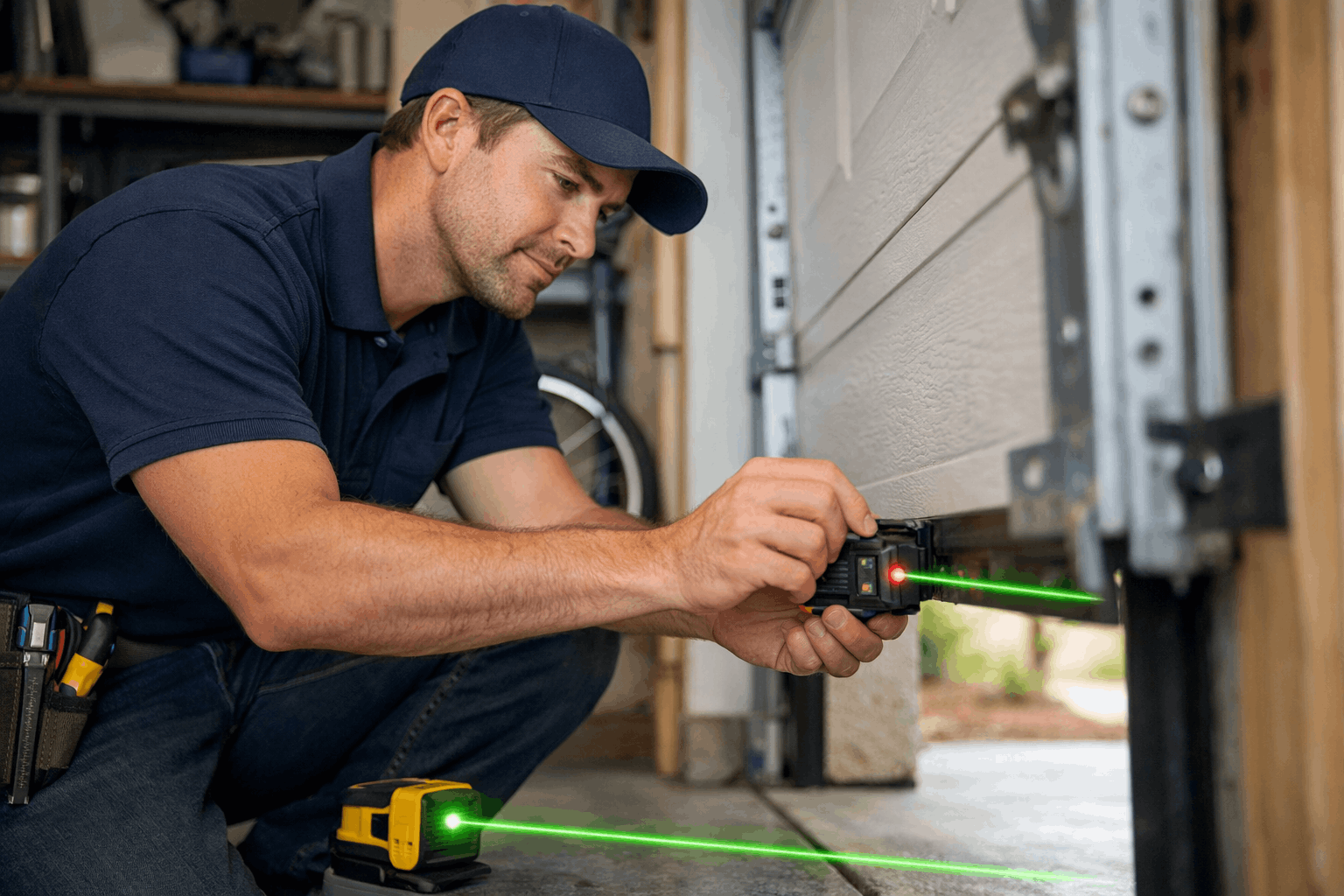
Sensor service costs in Orange County vary based on the complexity of the problem, accessibility of the installation, and whether replacement parts are needed. Understanding typical service pricing helps homeowners budget for sensor maintenance and repairs.
Several factors affect final service costs, including the age and condition of existing wiring, compatibility requirements with specific opener brands, and any additional safety upgrades recommended during service calls.
Most sensor problems can be resolved with basic alignment and cleaning services, but some situations require more extensive work that affects overall service pricing.
Basic sensor alignment and cleaning typically costs $75-125 in Orange County, while sensor replacement ranges from $150-300 depending on the sensor type and installation requirements. Service pricing includes diagnostic testing, adjustment or replacement, and verification of proper operation.
Emergency service calls may include additional fees for after-hours or weekend service, particularly for urgent situations where garage door safety is compromised. Most routine sensor maintenance can be scheduled during regular business hours to avoid premium pricing.
Cost variables include the accessibility of sensor mounting locations, condition of existing wiring, and whether sensors require special mounting hardware or extended wiring runs. Homes with custom garage configurations or multiple door systems may have higher service costs due to increased complexity.
Additional pricing factors include the need for electrical permits, compatibility requirements for specific opener brands, and any recommended safety upgrades that improve overall system reliability and performance.
Urgent Garage Doors serves Irvine and all of Orange County.
Garage door safety sensors represent one of your home's most important safety systems, preventing accidents and protecting your family from injury. Regular testing and maintenance keep these sensors functioning properly, while prompt attention to alignment issues prevents minor problems from becoming major failures.
Understanding how to test, clean, and adjust your sensors empowers you to maintain your garage door's safety features between professional service calls. However, don't hesitate to contact qualified technicians when sensor problems exceed your comfort level or when complex wiring and installation issues arise.
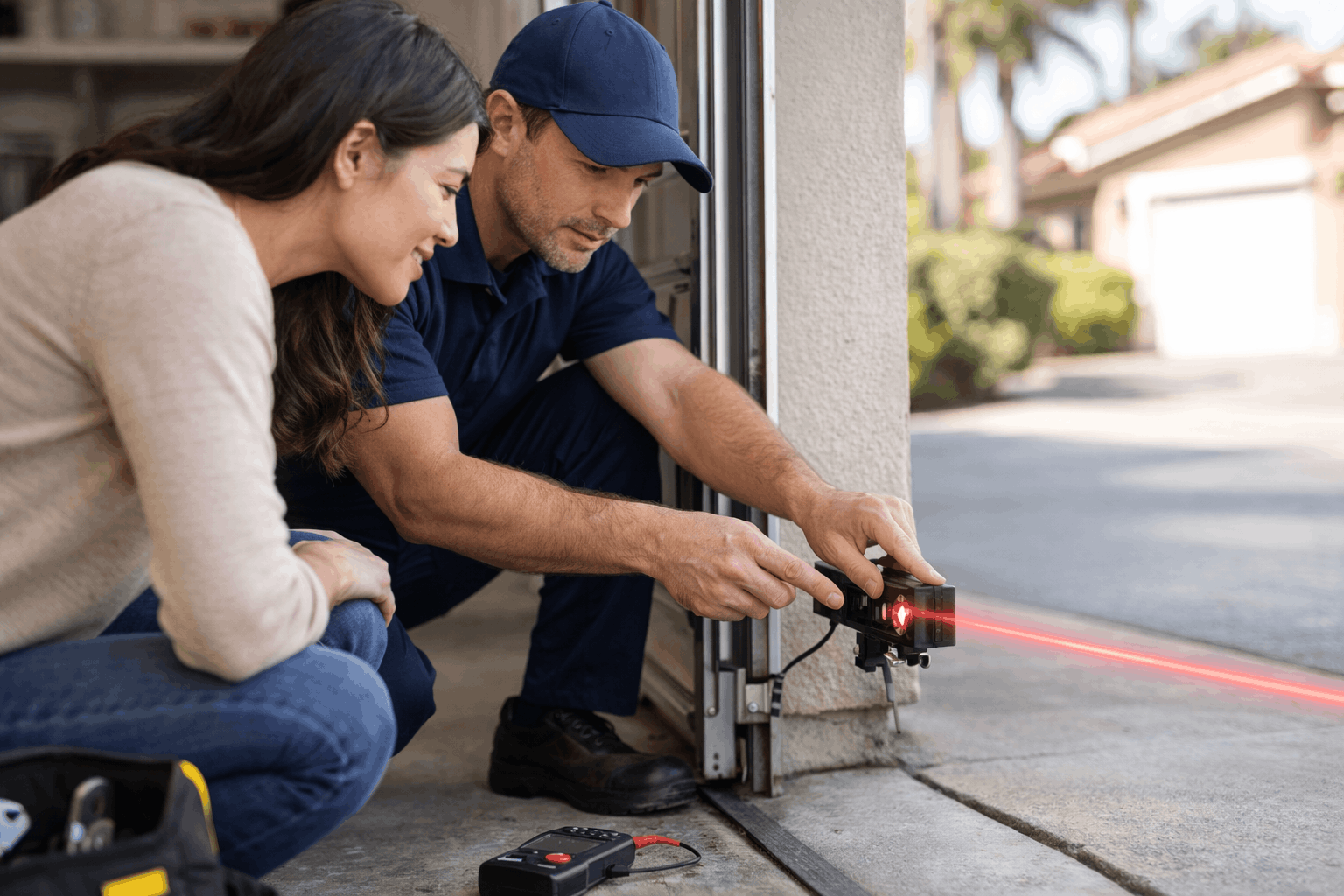
Test your garage door safety sensors monthly using the cardboard box method to verify proper operation. Perform additional tests after earthquakes, severe weather, or any garage work that might affect sensor alignment. Regular testing helps identify problems before they cause complete system failure and maintains your family's safety protection.
Bypassing garage door sensors is not recommended and may violate local safety codes and insurance requirements. Sensors provide critical safety protection that prevents serious injuries and property damage. If sensors malfunction, contact a professional for immediate repair rather than disabling this important safety system.
Temperature changes between day and night can cause slight expansion and contraction in sensor mounting brackets, affecting alignment just enough to cause intermittent problems. Additionally, some sensors are sensitive to temperature extremes that affect their electronic components. Check alignment during both day and nighttime conditions to identify temperature-related issues.
Test sensors independently using the LED diagnostic lights and beam interruption tests described in this article. If sensors show proper LED status and detect beam interruption correctly, but the door still won't operate normally, the problem likely lies with the opener mechanism rather than the sensor system.
Basic sensor replacement is possible for handy homeowners with proper tools and safety knowledge. However, professional installation ensures proper compliance with safety codes, correct wiring connections, and optimal positioning. Complex installations involving new wiring runs or unusual mounting situations require professional expertise for safe and reliable operation.
Most garage door sensors last 10-15 years under normal conditions, though Orange County's coastal environment may reduce this lifespan due to salt air corrosion and moisture exposure. Sensors in protected indoor locations typically last longer than those exposed to weather and environmental contaminants.
Wireless sensors offer installation flexibility but may experience signal interference or battery maintenance requirements that wired sensors don't have. Wired sensors generally provide more reliable operation and don't require battery replacement, making them preferable for most residential applications. Choose wireless sensors only when running new wires is impractical.
This symptom typically indicates a problem with the wall button wiring or programming rather than sensor malfunction. Both remote and wall button controls use the same sensor safety system, so sensor problems would affect both operating methods equally. Check wall button connections and programming settings first.
Professional safety sensor alignment repair typically costs $75-150 in Orange County, depending on the complexity of the alignment problem and any cleaning or minor repairs needed. This service includes diagnostic testing, adjustment, and verification of proper operation to restore full safety protection.
Recurring alignment problems usually indicate worn mounting brackets, foundation settling, or vibration from nearby construction. Consider upgrading to more robust mounting hardware or relocating sensors to more stable mounting points. If problems persist, professional evaluation can identify underlying causes and recommend permanent solutions.
Don't let sensor problems compromise your family's safety. Contact Urgent Garage Doors for professional sensor testing, alignment, and repair services throughout Orange County. Our experienced technicians provide same-day service and guarantee your garage door safety systems work properly. Call us today for a comprehensive sensor inspection and alignment service.
Licensed garage door services professionals serving Irvine and Orange County.
Licensed in California · License #1055150
Why trust Urgent Garage Doors?
Founded in 2017, Urgent Garage Doors is a licensed and insured garage door services serving Irvine and Orange County. All content is reviewed by our licensed technicians.
Urgent Garage Doors serves Irvine and all of Orange County.
Learn to diagnose garage door shaking in Irvine - whether rollers, tracks, or springs cause the problem. Expert repair guidance, costs, and safety tips from local professionals.
Learn how to navigate Irvine HOA requirements when replacing your garage door. Complete guide to avoiding violations, choosing compliant options, and working with architectural review committees.
Discover why Anaheim Hills homes require heavy-duty garage door springs due to extreme temperatures, heavy insulated doors, and unique climate challenges that cause standard springs to fail prematurely.
