Sarah Martinez never expected her garage door to crash down on her car at 6:30 AM on a Tuesday morning. The three-year-old springs on her Anaheim Hills home had snapped without warning, leaving her trapped in the garage and late for an important meeting. What she didn't know was that the "standard" springs installed during her home's construction were never designed to handle the weight of her insulated steel door through Southern California's temperature swings.
This scenario plays out weekly across neighborhoods from Hidden Canyon to Serrano Heights. Homeowners discover too late that their garage door springs weren't built for the unique demands of Anaheim Hills properties.
The combination of heavy insulated doors, extreme temperature variations, and the dry climate creates the perfect storm for spring failure. Heavy-duty garage door springs aren't just an upgrade - they're a necessity for most homes in this area - can save homeowners thousands in repairs and prevent dangerous accidents.
Anaheim Hills Climate Creates Unique Spring Challenges
The microclimate in Anaheim Hills puts garage door springs through punishment that standard residential springs can't handle. Located in the foothills with elevation changes from 400 to 1,400 feet, temperature fluctuations between morning and afternoon can exceed 30 degrees during summer months. These dramatic swings cause metal expansion and contraction that weakens spring coils faster than in coastal areas.
Properties along Nohl Ranch Road and up into the canyon areas experience even more severe conditions. The combination of intense summer heat radiating off concrete driveways and cool overnight temperatures creates a daily stress cycle that standard springs weren't engineered to withstand. Our service calls spike every September and October when homeowners return from vacation to find their springs have failed during the hottest weeks of the year.
The dry Santa Ana winds that funnel through the canyons carry dust and debris that infiltrate garage mechanisms. This creates additional friction and wear on spring systems already stressed by climate conditions. Properties in developments like Peralta Hills and Oak Canyon regularly see spring failure rates 40% higher than coastal communities just 20 miles away.
Temperature Swings Between Seasons
Metal springs expand when heated and contract when cooled. In Anaheim Hills, garage temperatures can reach 120°F in summer and drop to 40°F on winter mornings. This 80-degree range causes standard springs to flex beyond their design parameters daily. Over months and years, this constant expansion and contraction creates microscopic cracks that eventually lead to catastrophic failure.
Homes facing south toward the canyon slopes get hit worst. The morning sun heats garage doors rapidly, causing springs to expand quickly while the metal is still contracted from overnight cooling. This thermal shock accelerates fatigue in standard wire gauge springs that lack the structural integrity to handle repeated stress cycles.
Dry Air and Spring Metal Fatigue
Humidity levels in Anaheim Hills average just 15-25% during peak summer months. This extremely dry air removes moisture from spring coils, making the metal more brittle and susceptible to cracking. Standard springs rely on trace moisture to maintain flexibility, but the desert-like conditions during Santa Ana wind events can drop humidity below 10%.
The combination of dry air and temperature extremes creates metal fatigue patterns we don't see in more temperate climates. Springs develop stress fractures along the coil windings, particularly where the spring attaches to the drum assembly. These fractures propagate quickly once started, often resulting in complete spring failure within weeks of the first crack appearing.
Typical Garage Door Weights in Anaheim Hills Properties
Understanding garage door weight is the foundation of proper spring selection. Most Anaheim Hills homes feature doors significantly heavier than the 125-150 pound doors that standard springs are designed to support. The emphasis on energy efficiency and noise reduction has led builders to install insulated steel and custom wood doors that often exceed 200 pounds.
Door weight directly determines spring capacity requirements. A door that's 50 pounds heavier than expected will cause springs to fail 60-80% faster than their rated cycle life. This explains why so many homeowners face repeated spring replacements every 2-3 years instead of the 7-10 year lifespan they expected.
- Single insulated steel doors: 160-200 pounds
- Double insulated steel doors: 280-350 pounds
- Custom wood single doors: 180-250 pounds
- Custom wood double doors: 320-450 pounds
- Glass panel contemporary doors: 200-300 pounds
Properties in developments like Eastbluff and Canyon Rim commonly have doors at the higher end of these ranges due to architectural requirements and HOA design standards that favor substantial, well-insulated garage doors.
Insulated Doors in Newer Developments
Homes built in Anaheim Hills during the 1990s and 2000s building boom came standard with insulated garage doors for energy efficiency. These doors feature steel skins filled with polyurethane foam insulation, adding 40-60 pounds compared to uninsulated doors. The insulation also increases door thickness, requiring heavier hardware throughout the system.
Neighborhoods like Serrano Heights and Oak Canyon feature homes where builders installed 2-inch thick insulated doors that weigh 180-220 pounds for single doors. The original springs installed during construction were often sized for 150-pound doors, creating an immediate mismatch that leads to premature failure and excessive wear on garage door opener systems.
Custom Wood Doors in Canyon Areas
Hillside properties throughout Anaheim Hills frequently feature custom wooden garage doors that complement Mediterranean and Spanish colonial architecture. These doors, while beautiful, often weigh 50-100% more than standard steel doors. A custom wood double door can easily exceed 400 pounds when constructed with solid wood stiles and rails.
Properties along Canyon Rim Road and in the exclusive Ridgeline developments commonly have hand-crafted doors that require specialized spring calculations. The weight distribution differs from manufactured doors, and the wood's natural expansion and contraction adds additional stress to the spring system. Standard torsion spring systems simply cannot provide adequate support for these heavy custom installations.
Standard vs Heavy-Duty Spring Specifications
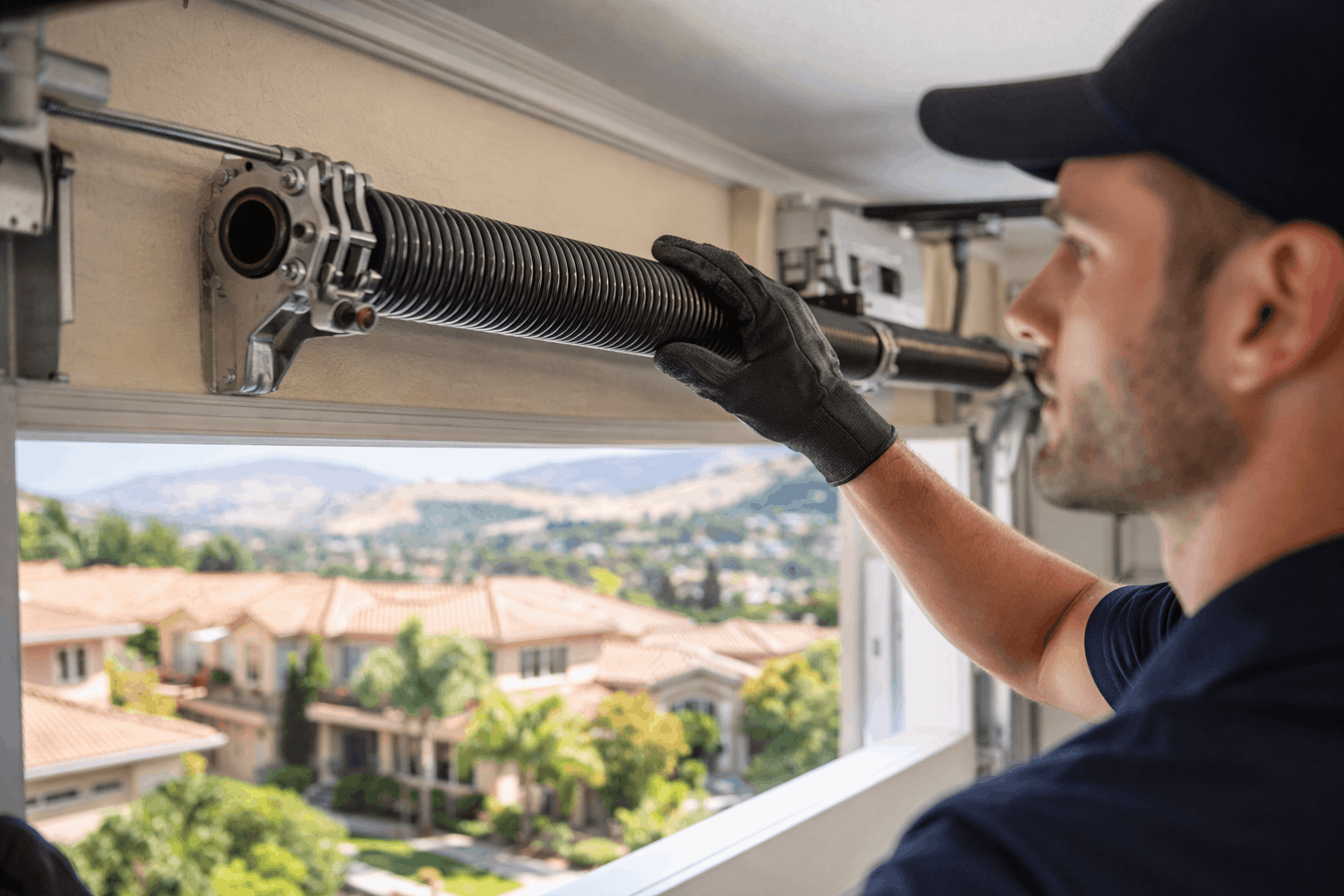
The difference between standard and heavy-duty garage door springs comes down to engineering specifications that directly impact performance and longevity. Standard residential springs use .218-.250 wire gauge with basic oil tempering, while heavy-duty springs feature .283-.295 wire gauge with specialized heat treatment processes that increase tensile strength by 35-40%.
Spring ratings indicate how many cycles the spring will perform before failure. Standard springs are typically rated for 10,000 cycles, which translates to 3-5 years of normal use. Heavy-duty springs carry ratings of 25,000-50,000 cycles, extending lifespan to 10-15 years under similar conditions. This cycle life difference becomes more pronounced in Anaheim Hills' harsh climate conditions.
| Specification | Standard Springs | Heavy-Duty Springs |
| Wire Gauge | .218 - .250 | .283 - .295 |
| Cycle Rating | 10,000 | 25,000 - 50,000 |
| Typical Lifespan | 3-5 years | 10-15 years |
| Weight Capacity | Up to 200 lbs | Up to 450 lbs |
| Wire Tensile Strength | 290,000 PSI | 320,000+ PSI |
The investment in heavy-duty springs pays dividends through reduced maintenance calls, fewer emergency repairs, and elimination of the safety risks associated with repeated spring failures.
Wire Gauge and Coil Diameter Differences
Wire gauge measurement works inversely - smaller numbers indicate thicker wire. Heavy-duty springs use .283 wire gauge compared to .218 in standard springs, representing a 30% increase in wire thickness. This thicker wire provides exponentially greater resistance to stress fractures and fatigue cracking that plague lighter gauge springs.
Coil diameter also increases with heavy-duty springs, typically measuring 2.0-2.5 inches compared to 1.75 inches for standard springs. The larger coil diameter distributes stress more evenly across the spring body, reducing hot spots where failures typically initiate. The combination of thicker wire and larger coils creates a spring capable of handling the weight and climate demands of Anaheim Hills properties.
Cycle Life Ratings and Warranties
Cycle life ratings represent the number of complete open-close operations a spring will perform before failure. A typical household performs 1,500-2,000 cycles annually, meaning 10,000-cycle springs last 5-7 years while 25,000-cycle heavy-duty springs provide 12-16 years of service. The actual lifespan depends heavily on door weight, climate conditions, and maintenance quality.
Heavy-duty spring warranties typically offer 5-7 years on parts compared to 1-2 years for standard springs. More importantly, quality heavy-duty springs include prorated warranties that provide partial credit toward replacement costs even after the initial warranty period expires. This warranty structure reflects manufacturer confidence in the superior durability of heavy-duty spring construction.
Signs Your Current Springs Are Inadequate
Recognizing the warning signs of inadequate springs can prevent dangerous failures and costly repairs. Homeowners often dismiss early symptoms as minor inconveniences, but these indicators signal springs operating beyond their safe capacity. The most common early warning sign is doors that open slowly or require multiple attempts to fully raise.
Properties throughout Eastbluff and Canyon Hills frequently show these warning signs during seasonal temperature changes when springs are under maximum stress. Paying attention to these symptoms and addressing them promptly can prevent the dramatic spring failures that damage vehicles, injure family members, and require emergency repair services.
The progression from minor symptoms to catastrophic failure often accelerates rapidly once springs reach their fatigue limit. Springs that have been operating near capacity for months can fail suddenly with no additional warning signs.
Door Opens Slowly or Unevenly
Weak springs force garage door openers to work harder during lifting cycles, resulting in slower door movement and jerky operation. Properly sized springs should lift 90% of the door's weight, leaving the opener to provide only final positioning and control. When springs lose tension or were undersized initially, doors move sluggishly and may pause during opening cycles.
Uneven door movement indicates one spring is weaker than the other, creating dangerous imbalanced loads on the door system. The door may rise faster on one side, causing binding in the tracks and excessive wear on rollers and hinges. This condition frequently leads to doors becoming off-track during operation.
Garage Door Opener Strain and Motor Failure
Inadequate springs create excessive workload on garage door openers, causing premature motor failure and drive mechanism wear. Openers designed to handle properly balanced doors suddenly face loads 2-3 times greater than their design capacity. This strain manifests as slow operation, frequent stopping during cycles, and eventual motor burnout.
Chain drive openers show strain through excessive noise and jerky movement, while belt drive systems may slip or stretch under the added load. Screw drive openers often develop gear wear that creates grinding noises during operation. The cost of repeated opener repairs and replacements quickly exceeds the investment in proper heavy-duty springs.
Frequent Spring Breakage Patterns
Homeowners trapped in cycles of repeated spring replacement every 2-3 years are typically dealing with undersized springs that cannot handle their door's weight and local climate conditions. Each replacement with standard springs perpetuates the problem, leading to ongoing repair costs and safety risks.
The failure pattern typically involves one spring breaking first, followed by the second spring failing within 3-6 months due to increased load. This creates a predictable cycle of emergency repairs that disrupts daily routines and often results in property damage when springs fail at inconvenient times. Breaking this cycle requires upgrading to appropriately sized heavy-duty springs designed for the specific door weight and local conditions.
Cost Analysis - Standard vs Heavy-Duty Springs
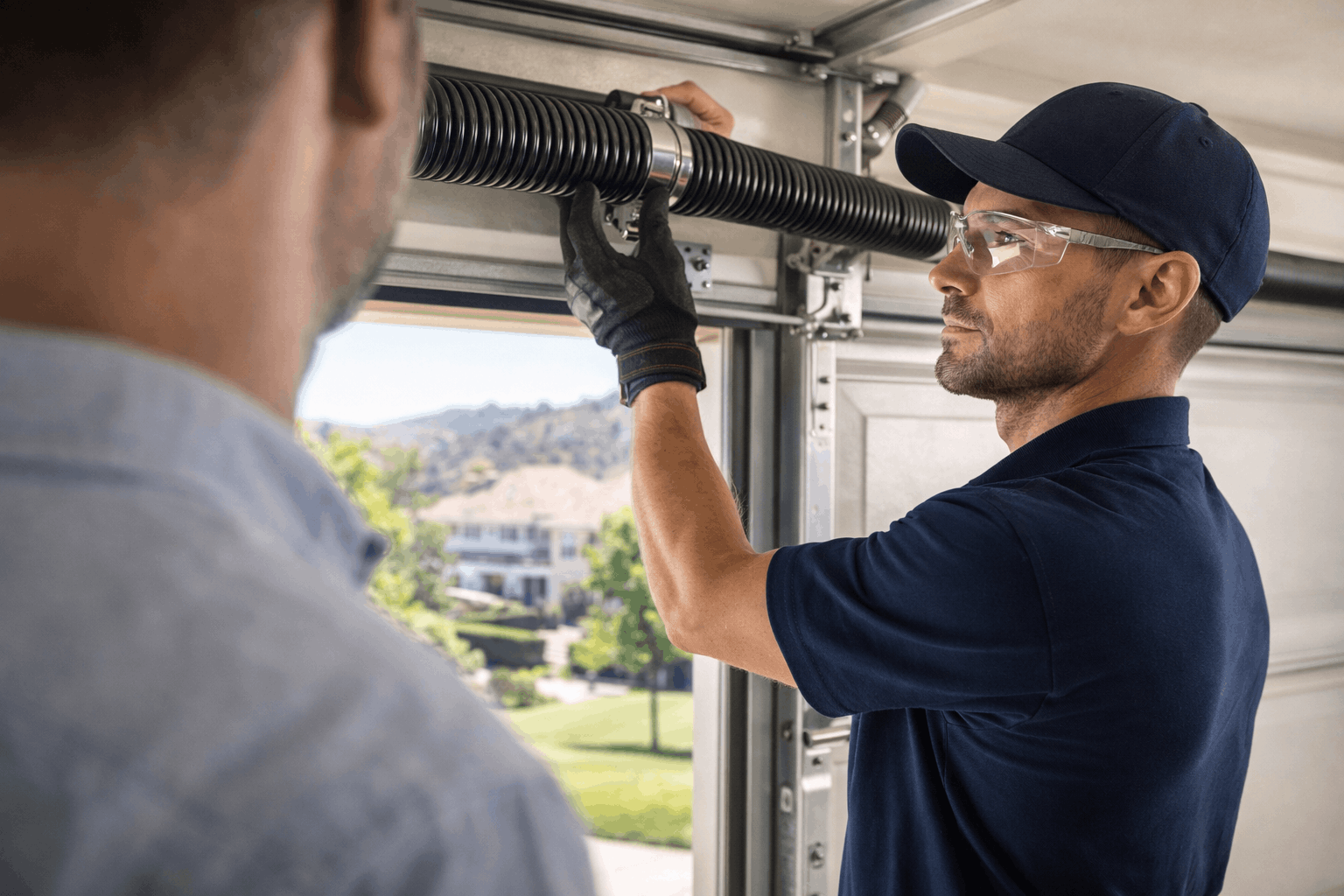
The financial comparison between standard and heavy-duty springs extends far beyond initial purchase price. While heavy-duty springs cost 40-60% more upfront, their extended lifespan and reduced maintenance requirements provide significant long-term savings. A comprehensive cost analysis must include installation labor, emergency repair calls, and related component wear.
Homeowners in Anaheim Hills who invest in heavy-duty springs typically see break-even within 4-5 years compared to repeated standard spring replacements. The savings accelerate after year five when heavy-duty springs continue operating while standard springs would require their second or third replacement cycle.
The hidden costs of inadequate springs include opener motor replacements, cable repairs, track realignment, and potential property damage from spring failures. These ancillary costs often exceed the price difference between standard and heavy-duty springs within the first failure cycle.
Initial Installation Cost Differences
Standard garage door springs with installation typically range from $200-350 for most Anaheim Hills homes, while heavy-duty spring installation costs $320-550 for the same doors. The price difference reflects both material costs and the specialized knowledge required for proper heavy-duty spring selection and installation.
The higher initial cost includes benefits like extended warranties, better safety factors, and reduced likelihood of emergency repairs during inconvenient times. Many homeowners find the additional upfront investment worthwhile when compared to the disruption and expense of repeated spring failures during busy morning routines or when leaving for vacation.
Long-Term Replacement Savings
Over a 15-year period, standard springs typically require 3-4 replacement cycles costing $900-1,400 in total. Heavy-duty springs installed once during the same period cost $450-650, creating savings of $450-750 in direct replacement costs. The savings increase when factoring in inflation and the tendency for emergency repairs to cost 50-100% more than scheduled maintenance.
Additional savings come from reduced wear on related components. Garage door cables last 2-3 times longer when properly supported by adequate springs, and opener motors experience significantly less wear when springs provide appropriate counterbalance support.
Safety Considerations for Undersized Springs
Undersized garage door springs create serious safety hazards that extend beyond inconvenience and repair costs. Springs operating beyond their design capacity can fail catastrophically, causing doors weighing 200-400 pounds to crash down without warning. These accidents result in vehicle damage, personal injury, and in extreme cases, fatalities.
The Anaheim Hills area sees multiple spring-related accidents annually, often involving children or elderly residents who cannot react quickly when springs fail unexpectedly. Properties with heavy custom doors and inadequate springs face the highest risk, particularly during temperature extremes when springs are under maximum stress.
Consumer Product Safety Commission data shows garage doors cause more injuries than any other home appliance, with spring failures contributing to a significant percentage of serious accidents. Proper spring sizing represents the most effective prevention strategy.
Sudden Spring Failure Risks
When overloaded springs reach their fatigue limit, failure occurs without warning. The stored energy in a compressed spring releases instantly, often with enough force to damage the door, tracks, and anything in the door's path. Cars parked in garages during spring failures commonly sustain roof damage costing thousands to repair.
Personal injury risks are highest when homeowners attempt to manually operate doors with broken springs. A door that normally weighs 25-30 pounds when properly balanced suddenly weighs its full 200-400 pounds when springs fail. Attempting to lift these doors manually can cause back injuries, pinched fingers, and crushing injuries if the door falls.
Cable and Hardware Damage
Weak springs create excessive stress throughout the entire door system. Cables stretch and fray under increased tension, often failing shortly after spring problems develop. Hardware components including hinges, rollers, and track brackets experience accelerated wear when springs cannot properly support the door's weight.
The cascade effect of spring-related component failures often costs more than the original spring replacement. Track repair and realignment becomes necessary when doors bind due to inadequate spring support, and roller replacement increases in frequency when systems operate under constant stress.
Local Building and HOA Requirements
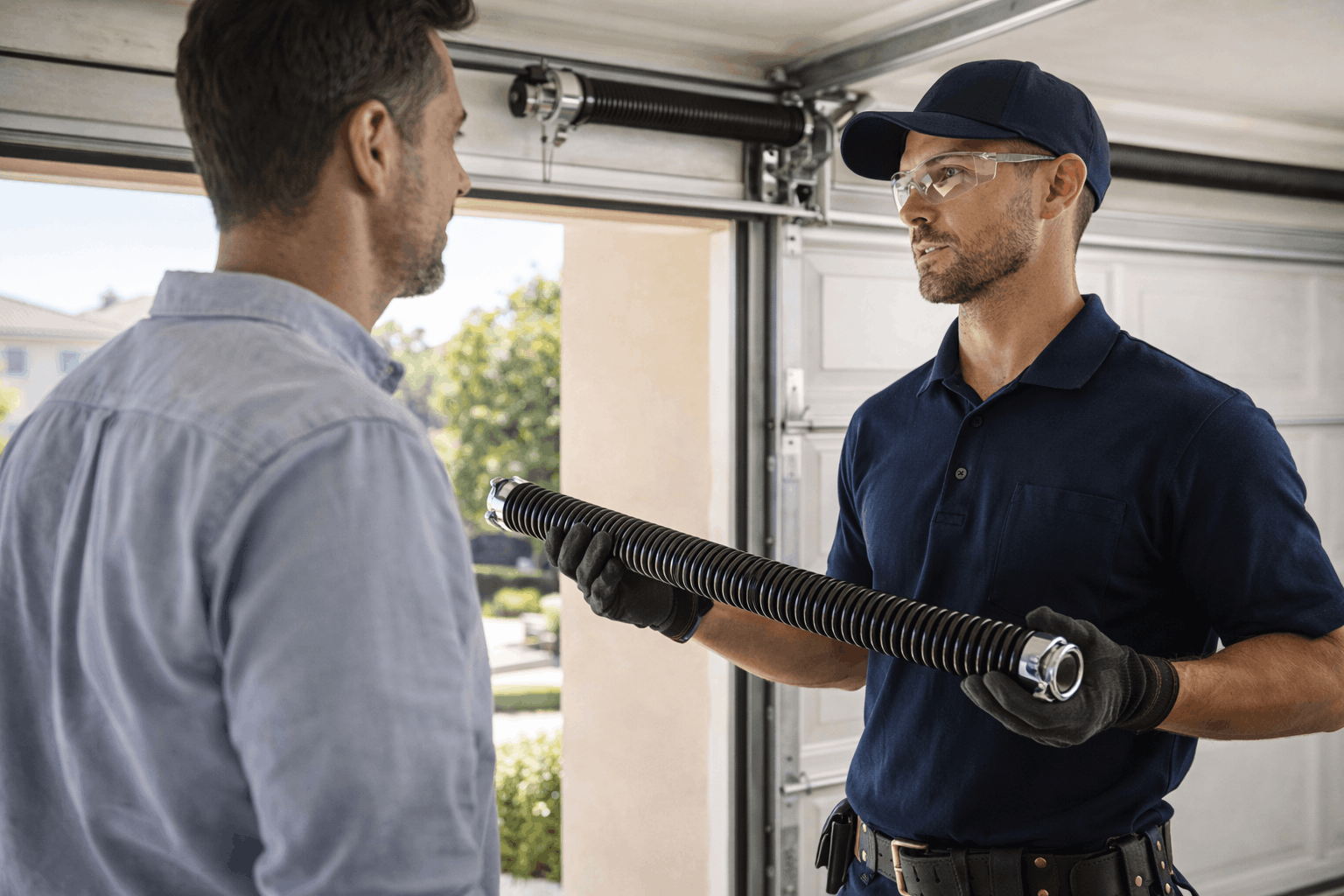
Orange County building codes and local HOA regulations significantly impact garage door spring requirements in Anaheim Hills communities. Recent code updates have strengthened safety requirements for residential garage doors, particularly regarding spring safety factors and backup systems. These regulations often mandate spring capacities that exceed standard residential specifications.
Many Anaheim Hills communities have HOA architectural guidelines that require specific door weights and materials, inadvertently necessitating heavy-duty spring systems. Communities like Peralta Hills and Oak Canyon have design standards that favor substantial, well-insulated doors that cannot be properly supported by standard spring systems.
Understanding these requirements helps homeowners avoid compliance issues during resale inspections and renovation permits. Properties with inadequate spring systems may face delays during escrow or require upgrades to meet current safety standards.
Orange County Building Code Standards
Current Orange County building codes require residential garage door springs to provide safety factors of at least 4:1 for door weight capacity. This means springs must be capable of supporting four times the door's weight to account for stress cycles, temperature variations, and safety margins. Standard springs often fail to meet this requirement for doors over 150 pounds.
The county also mandates safety sensor systems that must function properly with adequate spring support. Doors that move too slowly due to weak springs may not trigger safety sensors correctly, creating code compliance issues during inspections.
Community Association Guidelines
HOA communities throughout Anaheim Hills typically require garage doors that complement neighborhood architecture and provide adequate insulation values. These requirements often specify door materials and thicknesses that exceed the capacity of standard spring systems. Communities with Mediterranean or Spanish colonial themes frequently mandate wood or wood-look doors that require heavy-duty spring support.
Some associations have maintenance standards requiring prompt repair of garage door issues that affect neighborhood aesthetics. Doors that operate poorly due to inadequate springs may generate HOA violations and required correction notices that mandate proper repairs within specific timeframes.
Installation Challenges in Anaheim Hills Homes
Anaheim Hills homes present unique installation challenges that affect spring selection and mounting configurations. The area's diverse architectural styles, from 1970s ranch homes to contemporary hillside properties, create varying space constraints and structural considerations that impact heavy-duty spring installation.
Elevation changes throughout the community mean many homes are built on slopes, affecting garage ceiling heights and available clearance for spring systems. Properties along the canyon areas often have modified garage configurations to accommodate sloped driveways and unusual lot configurations.
- Limited headroom in older ranch-style homes
- Sloped ceilings following rooflines in hillside properties
- Modified framing for three-car and tandem garage configurations
- Unusual door sizes for architectural compatibility
- Structural limitations in post-and-beam construction
These installation challenges require experienced technicians familiar with local architectural patterns and building methods used throughout different development periods in Anaheim Hills.
Limited Ceiling Height in Older Homes
Homes built in Anaheim Hills during the 1970s and 1980s often feature low garage ceilings with minimal clearance above door openings. Standard torsion spring systems require 12-15 inches of headroom, while heavy-duty systems may need 18-20 inches due to larger spring dimensions and mounting requirements.
Properties in developments like Mohler Drive and older sections of Nohl Ranch Road frequently require creative installation approaches including low-headroom brackets, extension spring conversions, or specialized mounting configurations to accommodate heavy-duty springs in space-constrained garages.
Three-Car Garage Configurations
Many Anaheim Hills homes feature three-car garages with complex door configurations including tandem parking arrangements and mixed door sizes. These layouts require specialized spring calculations to ensure proper balance across multiple door systems sharing common structural support.
Wide single doors spanning two-car spaces are common in newer developments and require exceptionally heavy-duty springs due to their size and weight. These doors often exceed 400 pounds and need commercial-grade spring systems typically not found in residential applications. The installation complexity increases significantly for these oversized door systems.
Professional Installation vs DIY Risks
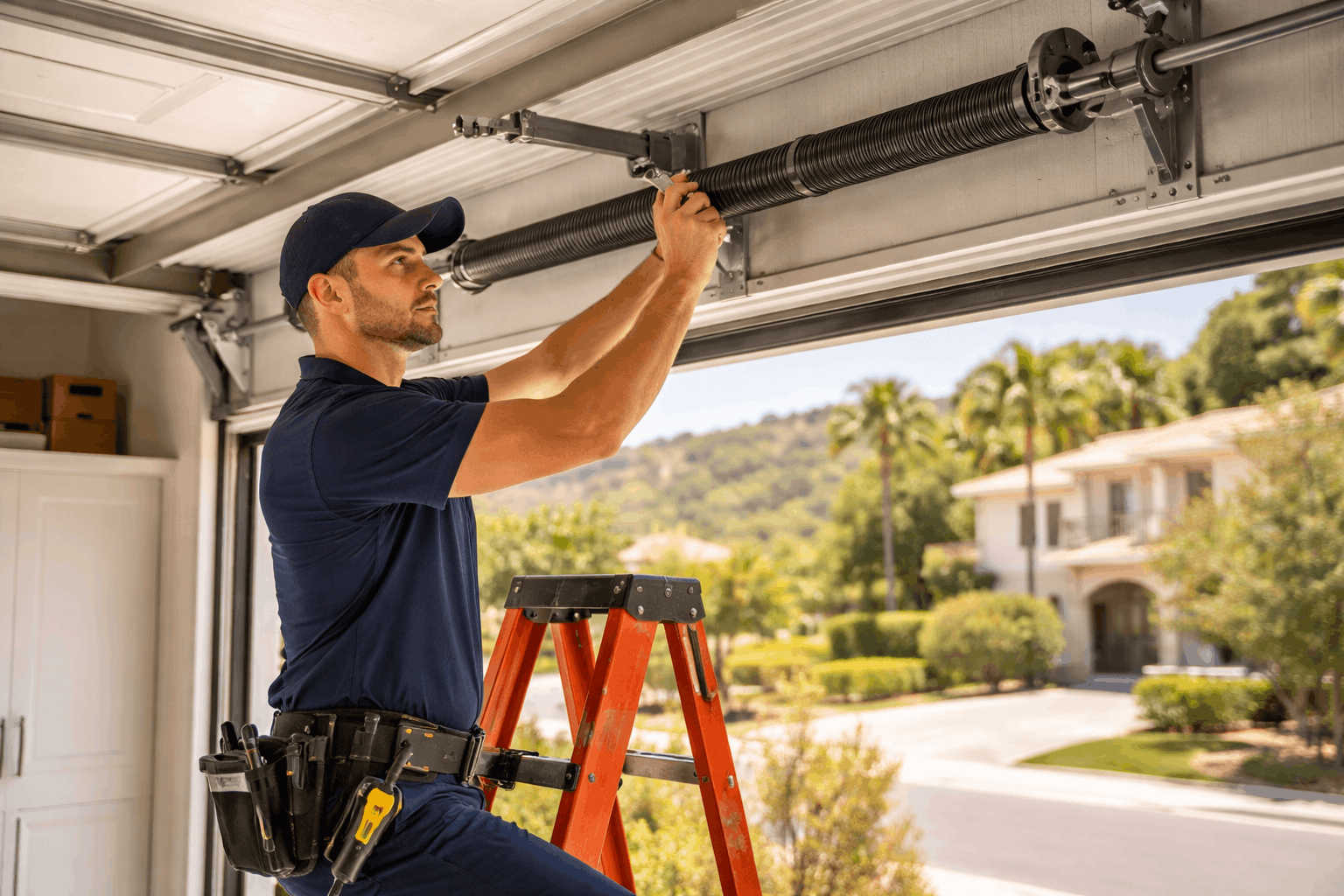
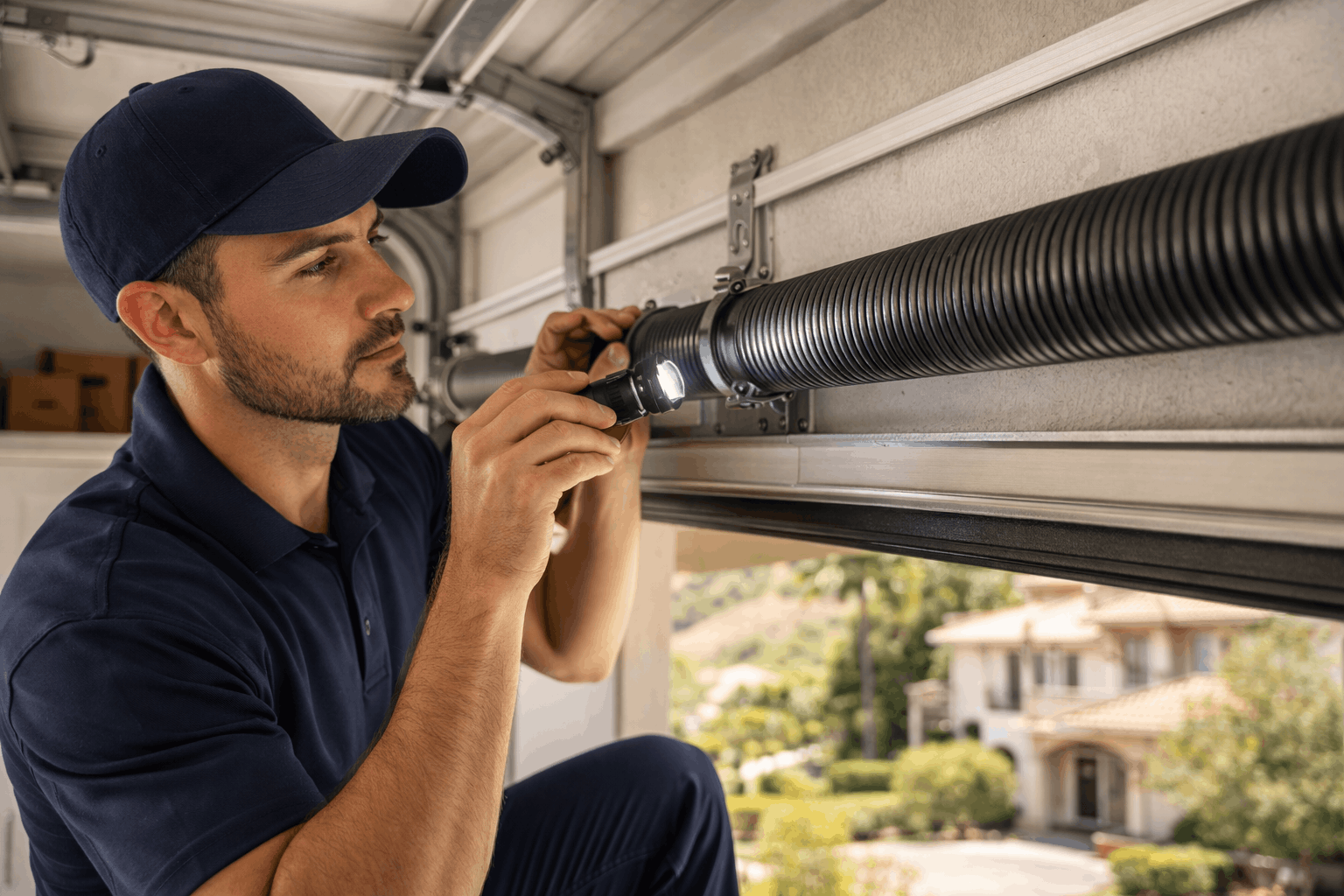
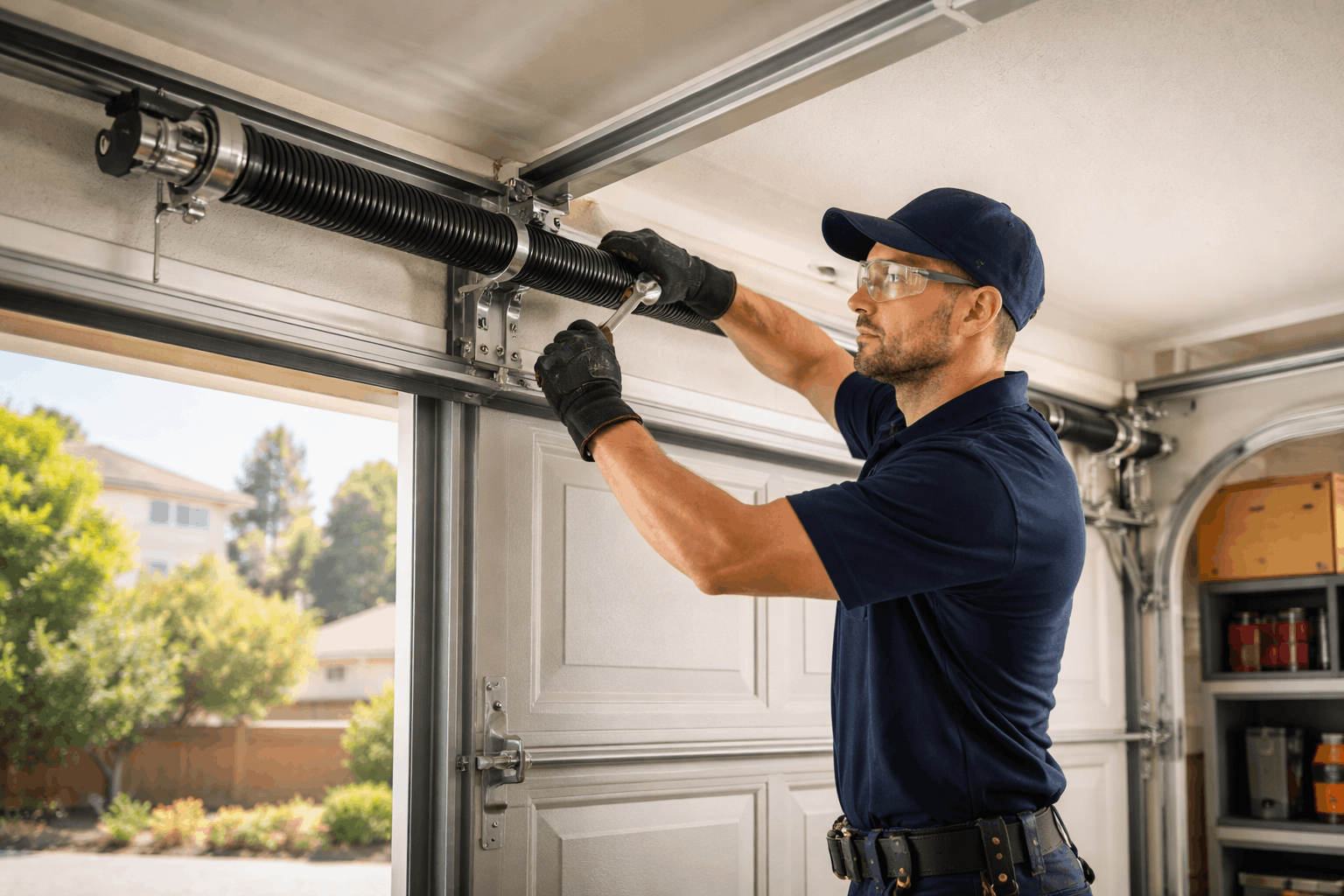
Heavy-duty garage door spring installation requires specialized tools, training, and safety equipment that make DIY installation extremely dangerous. The increased tension and stored energy in heavy-duty springs magnify the risks associated with improper installation techniques. Professional installation ensures proper spring selection, correct tension settings, and safe mounting procedures.
Insurance and warranty coverage often depends on professional installation by licensed technicians. DIY installations void manufacturer warranties and may create liability issues if spring failures cause property damage or personal injury. The complexity of heavy-duty spring systems makes professional installation not just safer, but necessary for optimal performance.
| Aspect | DIY Installation | Professional Installation |
| Safety Risk | Extremely High | Minimized by Training |
| Warranty Coverage | Voided | Full Protection |
| Proper Tensioning | Guesswork | Calibrated Equipment |
| Code Compliance | Uncertain | Guaranteed |
| Insurance Coverage | May be Excluded | Full Coverage |
The cost savings from DIY installation disappear quickly when problems arise from improper installation techniques or incorrect spring selection.
Specialized Tools and Training Required
Heavy-duty spring installation requires winding bars specifically sized for larger springs, torque wrenches calibrated for high-tension applications, and safety equipment including eye protection and work gloves rated for sharp metal components. Professional technicians undergo extensive training on spring physics, tension calculations, and safety procedures.
Proper spring winding technique requires understanding of how many turns create appropriate tension for specific door weights. Over-tensioning can cause immediate spring failure, while under-tensioning creates the same problems the upgrade was meant to solve. Professional installers use mathematical calculations and measurement tools to achieve precise tension settings.
Warranty and Liability Considerations
Manufacturer warranties on heavy-duty springs specifically require installation by certified technicians to remain valid. DIY installations automatically void all warranty protection, leaving homeowners responsible for replacement costs if springs fail prematurely. Professional installations include both manufacturer warranties and installer guarantees on workmanship.
Liability insurance coverage may exclude claims related to DIY garage door work due to the known safety risks involved. Professional installations carry full insurance protection and bonding that covers any installation-related issues. The peace of mind from professional installation often justifies the labor cost difference.
Maintenance Tips for Heavy-Duty Springs
Proper maintenance extends heavy-duty spring lifespan and ensures safe operation throughout their service life. The investment in quality springs deserves protection through regular care and attention to operating conditions. Simple maintenance tasks performed quarterly can prevent premature wear and identify developing problems before they cause failures.
Anaheim Hills' dusty conditions and temperature extremes make maintenance more important than in milder climates. Springs exposed to blowing dust and debris need more frequent cleaning and lubrication to maintain smooth operation and prevent corrosion that can weaken spring coils over time.
A preventive maintenance schedule should include visual inspections, lubrication, cleaning, and operational testing to catch problems early and maintain optimal spring performance throughout their extended lifespan.
Lubrication Schedule and Products
Heavy-duty springs require lubrication every 90 days in Anaheim Hills conditions, with additional attention during Santa Ana wind seasons when dust infiltration increases. Use only garage door-specific lubricants that resist temperature extremes and won't attract additional dust and debris. Avoid penetrating oils that can damage spring temper.
Apply lubricant to spring coils, bearing plates, and contact points where springs interface with drums and mounting hardware. Wipe excess lubricant to prevent dust accumulation that can accelerate wear. The goal is thin, even coverage that reduces friction without creating sticky surfaces that trap contaminants.
Visual Inspection Checkpoints
Monthly visual inspections should focus on spring coils for signs of stress cracking, corrosion, or uneven wear patterns. Look for gaps between coils that indicate stretching or loss of tension. Check mounting hardware for looseness or wear that could affect spring alignment and operation.
Watch for changes in door operation including slower movement, uneven lifting, or increased opener noise that might indicate developing spring problems. Early detection allows for planned replacement rather than emergency repairs when springs fail completely. Document inspection findings to track changes over time and predict maintenance needs.
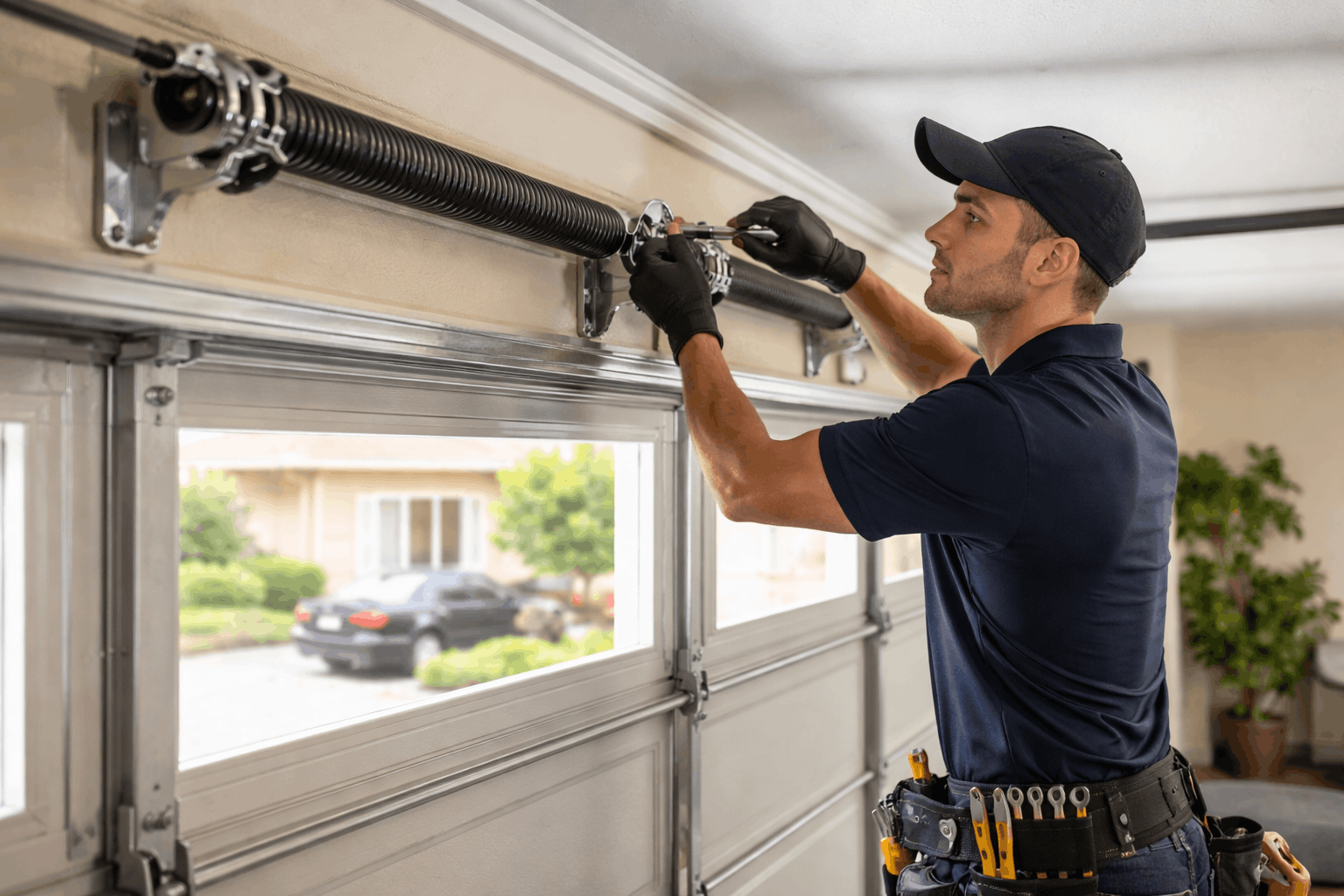
Choosing the Right Service Provider
Selecting a qualified contractor for heavy-duty spring installation requires evaluating experience with local conditions, proper licensing and insurance, and familiarity with the specific challenges of Anaheim Hills properties. Not all garage door technicians have experience with heavy-duty spring systems or the unique requirements of hillside homes and custom door installations.
The best service providers maintain relationships with commercial spring suppliers and stock heavy-duty components locally to minimize lead times and ensure availability during emergencies. They should also understand local building codes, HOA requirements, and the architectural considerations that affect spring selection in different neighborhoods.
Look for contractors who can provide references from similar properties in your neighborhood and demonstrate knowledge of the specific challenges facing garage door systems in your area's climate and conditions.
Local Experience and Community Knowledge
Contractors familiar with Anaheim Hills properties understand the difference between older homes in Oak Canyon with space constraints and newer properties in Serrano Heights with oversized doors. This local knowledge translates to accurate spring selection, appropriate installation techniques, and realistic performance expectations.
Experience with local climate conditions helps contractors recommend maintenance schedules and identify potential problem areas before they cause failures. Technicians who regularly service properties throughout the canyon areas understand how temperature extremes and wind patterns affect different neighborhoods differently.
Licensing and Insurance Requirements
Verify contractors hold current California contractor licenses and carry appropriate liability insurance and workers compensation coverage. Heavy-duty spring installation involves significant safety risks that require proper insurance protection for both the homeowner and installation crew.
Licensed contractors understand local building code requirements and permit processes when installations require structural modifications or electrical work. They also maintain relationships with local inspectors and understand compliance requirements that affect resale value and insurance coverage.
Final Thoughts
Heavy-duty garage door springs represent a smart investment for Anaheim Hills homeowners dealing with challenging climate conditions, heavy doors, and safety concerns. The upfront cost premium pays dividends through extended lifespan, improved safety, and reduced maintenance requirements over the long term.
The combination of extreme temperature swings, dry conditions, and heavier door installations common throughout the area creates the perfect case for upgrading beyond standard residential spring specifications. Homeowners who make this upgrade typically wish they had done it sooner after experiencing the reliability and peace of mind that properly sized springs provide.
Frequently Asked Questions
How long do heavy-duty garage door springs last?
Heavy-duty springs typically last 10-15 years in Anaheim Hills conditions, compared to 3-5 years for standard springs. The actual lifespan depends on door weight, usage frequency, and maintenance quality. Properties with proper maintenance and appropriate spring sizing often see 15+ years of service from quality heavy-duty springs.
Can I upgrade to heavy-duty springs on my existing garage door?
Most existing doors can accommodate heavy-duty spring upgrades, though space constraints in older homes may require mounting modifications. The door's weight and balance requirements determine spring specifications, not the door's age. A professional evaluation can determine compatibility and any necessary structural modifications for your specific installation.
What happens if I install standard springs on a heavy door?
Standard springs on heavy doors fail prematurely, typically within 1-3 years instead of their rated lifespan. The door operates poorly, strains the opener motor, and creates safety risks from potential sudden failure. Component wear throughout the system accelerates, leading to frequent repairs and higher long-term costs.
How much do heavy-duty garage door springs cost?
Heavy-duty spring installation typically costs $320-550 in the Anaheim Hills area, depending on door size and spring specifications. While this represents a 40-60% premium over standard springs, the extended lifespan and reduced maintenance costs provide long-term savings that justify the initial investment.
Do heavy-duty springs work with all garage door openers?
Heavy-duty springs actually reduce strain on garage door openers by providing better door balance and smoother operation. They're compatible with all opener types and often extend opener lifespan by reducing the motor workload. Some older openers may benefit from adjustment or upgrade to optimize performance with properly balanced doors.
How can I tell if my current springs are heavy-duty?
Heavy-duty springs feature thicker wire gauge (.283 or larger), larger coil diameters, and typically display cycle ratings of 25,000+ on manufacturer labels. They also operate more smoothly and quietly than standard springs. A professional inspection can definitively identify spring specifications and determine if upgrades would benefit your specific door system.
Should both springs be replaced at the same time?
Always replace springs in pairs to maintain balanced door operation and prevent premature failure of the remaining spring. When one spring fails, the other has experienced similar stress and wear, making failure likely within months. Balanced installation with matched springs provides optimal performance and safety.
What warranty comes with heavy-duty spring installation?
Quality heavy-duty springs typically include 5-7 year manufacturer warranties on parts, with many offering prorated coverage beyond the initial period. Professional installation includes workmanship guarantees of 1-2 years. The extended warranty coverage reflects manufacturer confidence in heavy-duty spring durability and proper installation procedures.
Are there different types of heavy-duty springs?
Heavy-duty springs are available in both torsion and extension configurations, with torsion springs being preferred for most applications. Commercial-grade options provide even higher cycle ratings and weight capacities for extremely heavy custom doors. Spring selection depends on door weight, available space, and specific performance requirements.
How soon can heavy-duty springs be installed?
Most installations can be scheduled within 24-48 hours for standard door sizes, though custom spring specifications may require 3-5 days for fabrication. Emergency installations are available for safety situations where doors are inoperable. Contact our team to discuss scheduling and availability for your specific requirements.